






Married to Addiction? The Young Brides of Makran Who Inherit a Husband’s Drug Dependency
By: Mahikan Maqbool
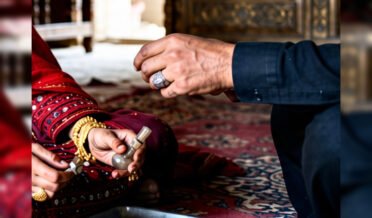
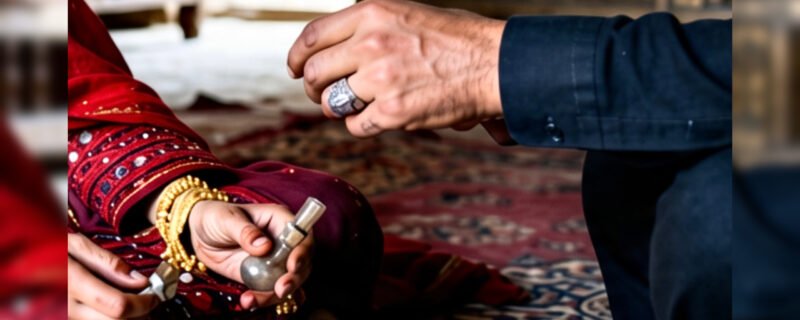
In the remote villages of Gomazi, Mand and Daazin in Balochistan’s Makran region, a disturbing social practice is placing young women at the intersection of addiction, patriarchy and institutional neglect. Families marry their daughters to men struggling with drug dependency, believing marriage will reform them. Instead, some brides find themselves drawn into the very addiction they were expected to cure, unknown from the start. There are particular kinds of cases as such, seeing which at usual times, leaves to denial. Though their kinds (drugs) vary from time to time, but the cases of bride’s dependency to such drugs by her spouse, especially few years after their marriage, remains unchanged within the span of a much longer time.
In the villages of Makran, where marriage is often regarded as a turning point in a man’s life, an unsettling belief has taken root in certain Baloch families, that a man addicted to drugs might abandon his dependency once he gets married, that a wife, a household, children and the responsibilities of family life might somehow restore him, that love might accomplish what treatment, rehabilitation and medical intervention have not and that he might be cured just like that.
And so, a young woman is married to him. This young Baloch bride arrives at her new home carrying the expectations traditionally placed upon a bride. She is expected to be patient, accommodating and understanding, she too is expected to build a family, preserve the marriage and, perhaps without anyone explicitly telling her, help her husband become a better man.
Only the well educated know that addiction does not foresee such a bait of lives. In reported cases from interior areas of Gomazi, Mand and Daazin, families and community accounts describe a deeply troubling reversal of this expectation. Rather than abandoning drugs, some husbands have reportedly encouraged their wives to consume them as well. The women who entered marriage without a history of substance use have subsequently become dependent themselves. The woman who was expected to rescue her husband begins be twice as much the victim. And in some cases, by the time anyone recognizes the magnitude of what has happened, the damage is already irreversible.
Behind these marriages lies a dangerous misunderstanding of addiction, the belief that it is a behavioral weakness that can be corrected through marriage. In conservative and close knit communities, marriage is frequently expected to discipline men, redirect their priorities and bring stability to their lives. For families struggling to confront a son’s drug dependency, marrying him to a woman from a respectable household may appear to be a practical solution. Hence, treating the bride’s life to be nothing but an assumption of a solution oriented experiment.
It is also, in some circumstances, a way of transferring a problem from one household to another. The groom’s family hopes that a wife will change him, the bride’s family may be given assurances that marriage will settle his life, the bride herself may have little knowledge of the extent of his addiction, the risks she faces or the possibility that she could be pressured into substance use having little to no knowledge what chaos awaits her.
When in Balochistan, and specifically in these areas, a family marries an addicted man to a woman in the hope that she will reform him, it is not necessarily solving a problem, but placing an innocent life, unaware of its doom, more into purgatory. The consequences can extend far beyond the marriage itself. According to reported community and local word of mouth, some young women in these villages have developed drug dependencies after being exposed to substances by their husbands. Others have experienced severe deterioration in their physical and psychological well-being. There are also accounts of young women dying following periods of substance use, although individual circumstances and medical causes require independent verification which is hardly very done on data survey and on local levels.
For anyone, but especially young women who become dependent, the consequences are devastating. Not only the new destruction victimizes them awfully but, their health suffers, their relationships deteriorate, their ability to care for themselves and their children can become compromised. Some reportedly experience repeated pregnancies and miscarriages, raising urgent questions about reproductive health, access to medical care and the effects of substance use during pregnancy.
It is important not to assume that every miscarriage is caused by drug use after such marriages of ignorance and unrealistic beliefs. Though, pregnancy loss does have multiple possible causes and requires clinical investigation but for those whose substance dependency and reproductive complications occur together, women need confidential, non-judgmental medical attention rather than blame or excuses afterwards. healthcare, protection and human dignity.
Perhaps, the most alarming aspect of this crisis is that its scale remains unknown. There appears to be no publicly available, dedicated survey establishing how many women in Gomazi, Mand and Dazin have developed substance dependency following marriage to men with existing addictions nor is there a verified local dataset documenting how many such marriages have resulted in drug dependency, reproductive complications, family breakdown or deaths of multiple women. Each word-of-mouth carried within the streets, each example of any women later shown or told stories about, and with each new case within the decade, one comes across factual belief of such existence of unsurvey oriented cases.
This absence of data should not be mistaken for an absence of suffering because even without systematic documentation, these women remain largely invisible in public-health discussions, their experiences are not adequately represented in policy debates, rehabilitation planning or international research on gender and substance use. The issue also exposes an important gap in how addiction is thought to be cured by a marriage balm within these areas and how females are exposed to a marriage contract of being misunderstood as a rehabilitator. Much of the public conversation focuses on the person consuming drugs and far less attention is paid to the women who are exposed to substance use within the household, sometimes under conditions of pressure, coercion or dependency. It must also be known that the bride’s story not only involves such a disguise of a wedding, but surely does involve deception, social pressure, manipulation, a lack of protection and the absence of alternatives.